Every healing flower, explained.
16 flowers from herbal tea traditions and pharmaceutical history, from lavender, linden, and pH-shifting butterfly pea to arnica, sweet clover, and the discovery of warfarin.
In this guide
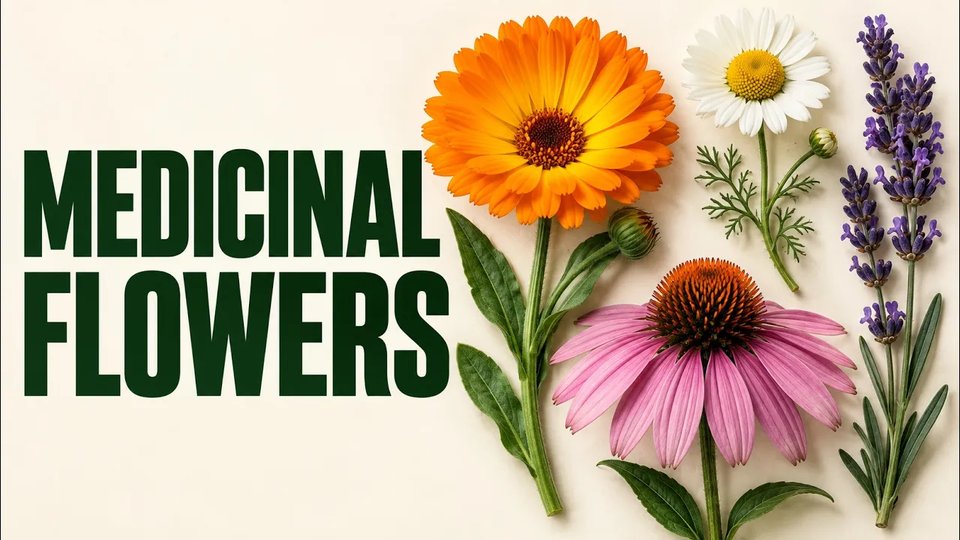
From gentle evening tisanes like linden, hibiscus, and lavender, and the butterfly pea blossom whose anthocyanins turn from cobalt blue to violet with a squeeze of lemon, to Neanderthal dental-calculus yarrow, external-only arnica, and the moldy sweet clover hay that led biochemists to warfarin. Watch the full documentary above, then explore the botanical notes and safety cautions below.
- ✓16 blossoms spanning culinary teas, botanical dyes, topical salves, and modern drug discovery
- ✓Why preparation matters: covered sub-boiling floral steeps vs. flowers that must never be swallowed
- ✓Critical safety boundaries on arnica ingestion, raw elder plant parts, borage pyrrolizidine alkaloids, and poppy alkaloids
Herbs in this video.
Explore the matching cupboard monographs for preparation notes, Latin binomials, and safety cautions.
Episode chapter notes & interactive timestamps (11:59) +
Why flowers produce intense pigments, nectar volatiles, and defensive alkaloids, and why "natural" never automatically means harmless.
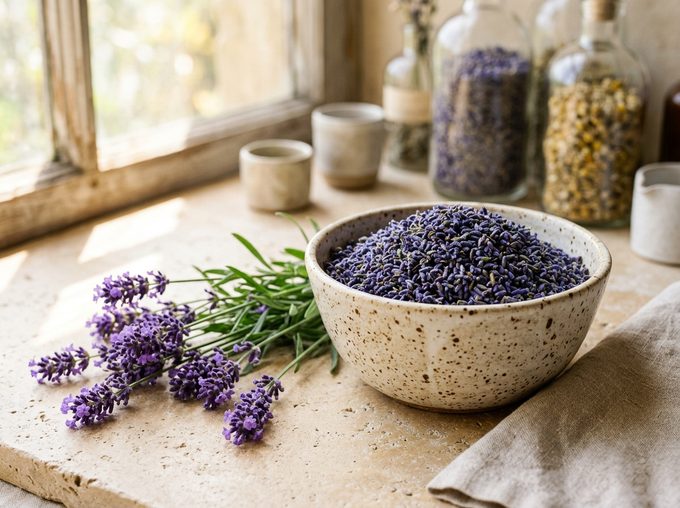
View Lavender →English culinary lavender buds rich in linalool and linalyl acetate; steep lightly for tea, while standardized oral lavender oil (Silexan) has been studied in clinical trials for restlessness.
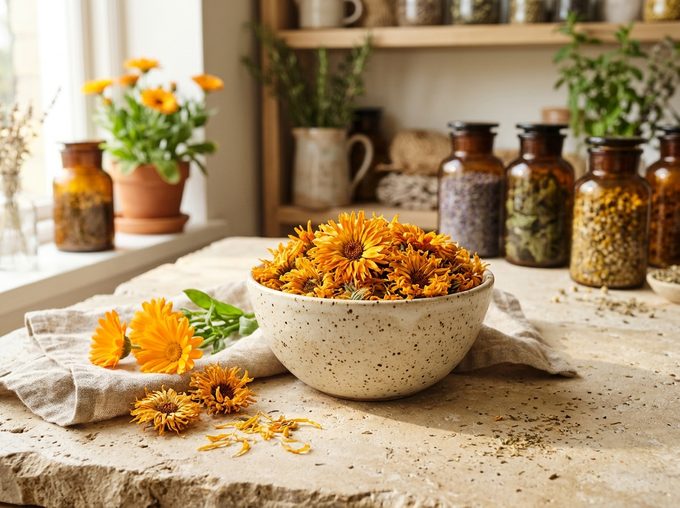
View Lavender →Resinous golden marigold petals rich in triterpenoid esters and carotenoids, steeped as a mild floral tisane or infused into topical skin oils; check for Asteraceae ragweed-family sensitivity.
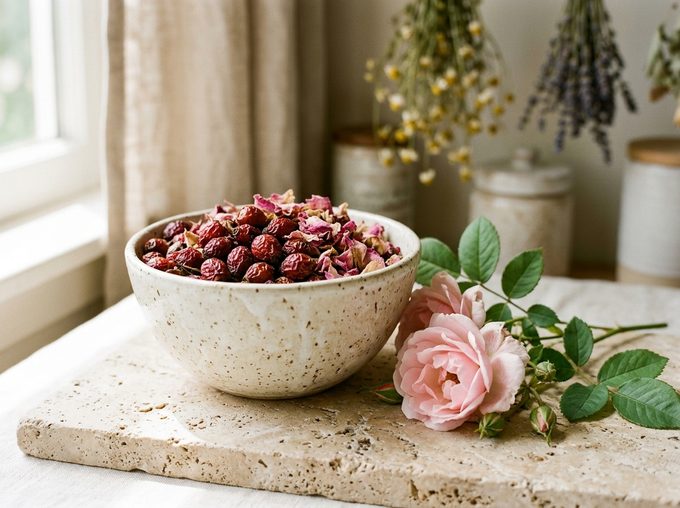
View Calendula Blossom →Thousands of Damask rose petals are steam-distilled for a single kilogram of rose otto, while autumn rosehips became Britain's wartime vitamin C syrup; strain fine inner rosehip hairs carefully.
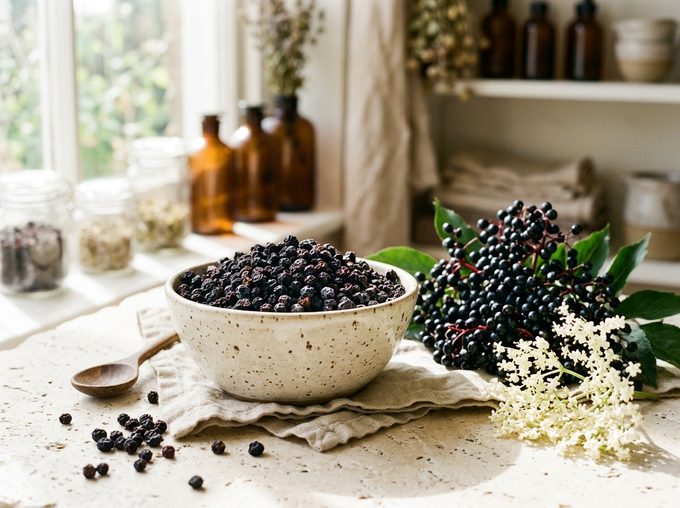
View Rosehip →Creamy late-spring umbels steeped for cordials and teas; never confuse ripe cooked berries or blossoms with raw unripe berries, stems, bark, or leaves, which contain cyanogenic glycosides that cause acute vomiting.
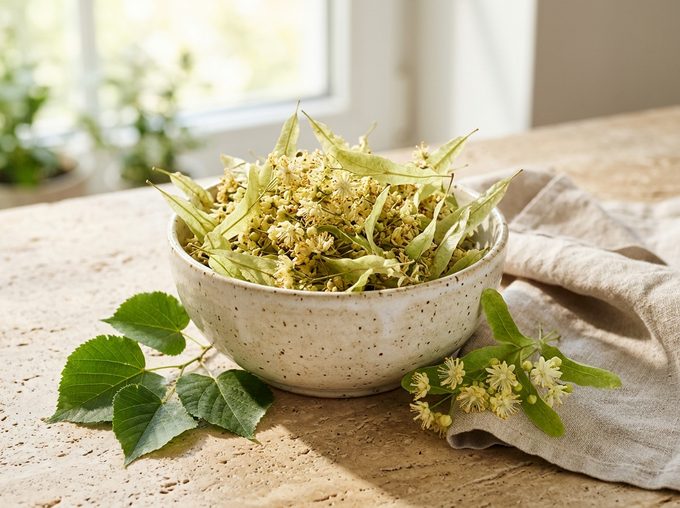
View Black Elderberry →Fragrant lime-tree blossom and pale-green bract steeped across France as evening tilleul (immortalized in Marcel Proust's Swann's Way) for a honeyed, mucilage-soft cup.
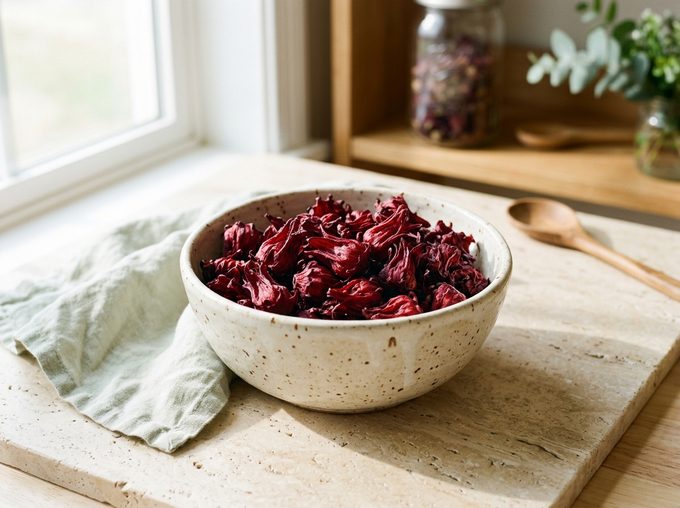
View Linden Blossom →Fleshy ruby calyces steeped hot or cold as agua de jamaica, karkadeh, and bissap; studied in clinical trials for modest effects on blood pressure, so check with a clinician if taking antihypertensive drugs.
View Hibiscus →Southeast Asian blossom rich in ternatin anthocyanins that brew bright blue in neutral water and shift to purple or magenta as lemon juice lowers the pH.
View Hibiscus →Night-blooming blossoms layered repeatedly with green tea leaves so the dry tea absorbs their indole and linalool perfume before the spent flowers are sifted out.
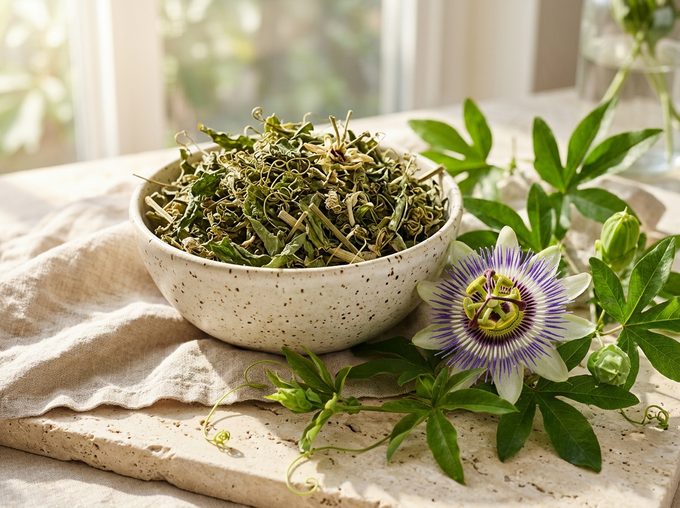
View Lavender →North American maypop vine named by 16th-century Spanish missionaries; aerial leaves and flowers are traditionally steeped as an evening nervine, though avoid during pregnancy and alongside sedatives.
View Passionflower →Resinous female strobiles introduced by medieval brewers to preserve and bitter beer; rich in humulones and 2-methyl-3-buten-2-ol, traditionally tucked into herbal pillows or bitter nighttime blends.
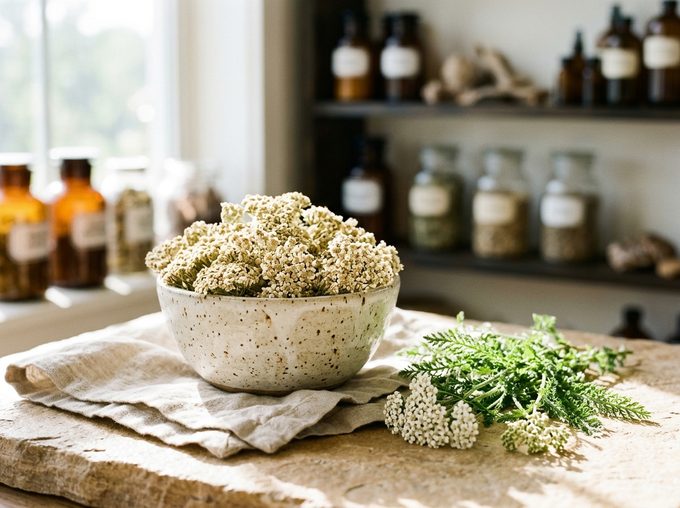
View California Poppy →Feathery Asteraceae flower named after Achilles and identified in 49,000-year-old Neanderthal dental calculus at El Sidron cave; briskly aromatic and bitter, and traditionally avoided during pregnancy.
View Common Yarrow →Starflower whose leaves and stems contain hepatotoxic unsaturated pyrrolizidine alkaloids (PAs); commercial borage seed oil is processed to remove PAs, whereas prolonged leaf teas pose liver risk.
View Calendula Blossom →European mountain daisy used strictly in diluted topical gels and salves on unbroken skin for bruises; swallowing arnica tea or tincture is poisonous and can cause gastroenteritis and cardiac arrhythmias.
View Calendula Blossom →Parthenolide-rich daisy traditionally chewed or steeped for headaches; a 2015 Cochrane review found mixed clinical evidence for migraine prevention, and mouth ulcers or Asteraceae reactions can occur.
View Chamomile →Coumarin gives cut sweet clover hay its vanilla scent, but when hay turns moldy, fungi convert coumarin into dicumarol, causing fatal cattle bleeding and leading Karl Paul Link's Wisconsin lab to synthesize warfarin.
View Red Clover Blossom →In 1804 Friedrich Sertuerner isolated morphine from poppy latex, launching modern alkaloid pharmacology; poppy latex and pods contain controlled, addictive opioids, and unwashed culinary seeds can carry surface opiate residues.
View California Poppy →How knowing Latin binomials, plant parts, and preparation limits keeps floral herbalism grounded and responsible.
View Chamomile →Scientific & historical sources cited in this guide (12 references) +
Peer-reviewed clinical reviews, toxicology monographs, institutional fact sheets, and primary historical texts referenced for Every Healing Flower Explained (and the Blue Tea That Changes Color):
- Journal of Clinical Oncology (Pommier et al., 2004, PubMed 15084618): Phase III trial of topical Calendula officinalis during radiotherapy ↗
- NIH NCCIH: Lavender clinical overview and safety profile ↗
- NIH NCCIH: Elderberry and raw plant part cyanogenic glycoside cautions ↗
- Marcel Proust, Swann's Way (Project Gutenberg EBook #7178): Linden blossom (tilleul) infusion ↗
- Journal of Hypertension (2015, PubMed 25599522): Meta-analysis of Hibiscus sabdariffa randomized trials ↗
- NIH NCCIH: Passionflower clinical summary and pregnancy caution ↗
- Naturwissenschaften (Hardy et al., 2012, PubMed 22810416): Neanderthal medics? Evidence for yarrow and chamomile in dental calculus ↗
- NCBI LiverTox Clinical Reference: Comfrey, Borage, and Pyrrolizidine Alkaloid hepatotoxicity ↗
- Memorial Sloan Kettering Cancer Center (MSKCC) About Herbs: Arnica topical use and internal toxicity ↗
- Cochrane Database of Systematic Reviews (Wider et al., 2015, CD002286): Feverfew for preventing migraine ↗
- American Chemical Society National Historic Chemical Landmark: Karl Paul Link and the Invention of Warfarin ↗
- Antioxidants (2023, PubMed 36839382): Clitoria ternatea (Butterfly Pea) ternatin anthocyanins and pH color chemistry ↗
Keep exploring.
All video guides →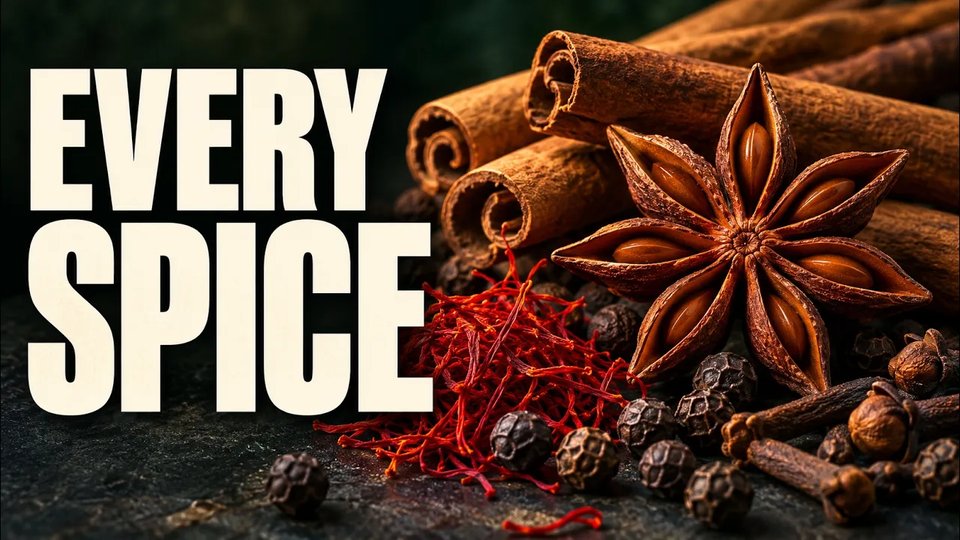
Every spice, explained.
15 kitchen spices and the global history, volatile chemistry, and culinary cautions behind each jar, from black pepper and Ceylon cinnamon to vanilla and saffron.
Watch & explore (11:44) →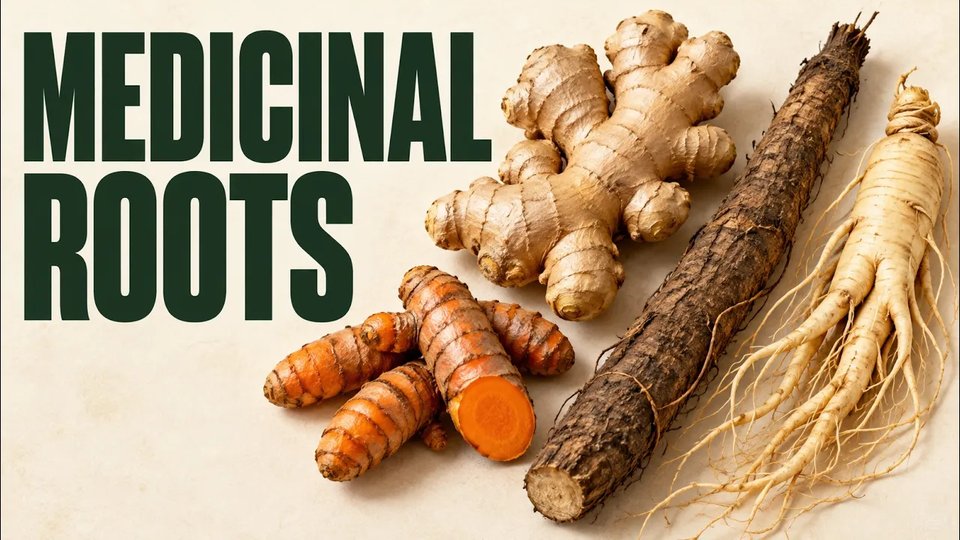
Every medicinal root, explained.
16 subterranean roots and rhizomes across food, perfumery, and herbal history, from roasted dandelion, burdock, and marshmallow root to astragalus, kava, and mandrake.
Watch & explore (11:44) →