Red Clover Blossom
Honey-Sweet Meadow Flower Head of Traditional Country Infusions.
Explore the common forms, learn a little about the plant, and choose what suits your cupboard.
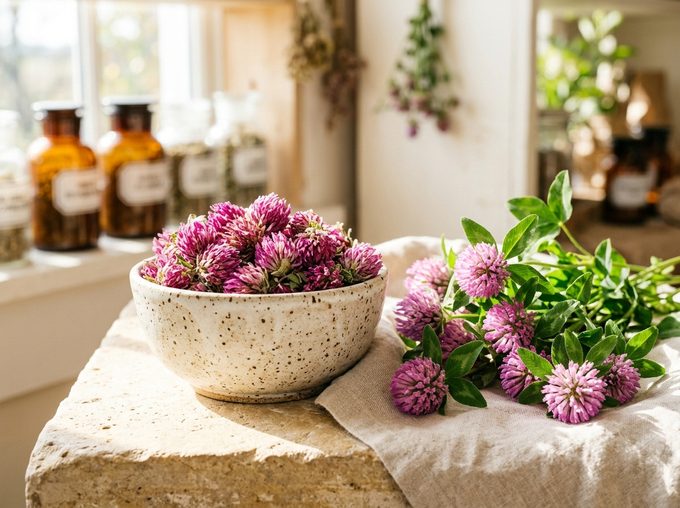
Whole dried red clover blossom flowers for steeping and infusions.
A little about red clover blossom.
The plant
Delicately sweet, honey-nectar floral, and fresh-cut meadow green. Native to Europe & Western Asia (Fabaceae (Legume Family)).
The forms
Most often prepared as a whole-blossom meadow infusion using 3 g – 4 g (3 to 4 whole dried purple flower heads or 2 tbsp) at 200°F (93°C) (10–15 min covered).
Before you choose
Check the label for the Latin name (Trifolium pratense), and choose the form that suits your cupboard.
Traditional uses & research +
Botanical taxonomy: Trifolium pratense (Fabaceae (Legume Family)) · Tradition: Nutritive & Berry Tonics · Key constituents: Isoflavones (Biochanin A, Formononetin), Coumarins, Volatile oils.
Curated collections: Ruby Berries & Floral Tisanes · Seasonal Harvest & Winter Apothecary · Seasonal almanac: April Almanac (Spring Garden Awakening & Young Leaves) · June Almanac (Midsummer Lavender & Sunlit Blossoms).
Traditional background: Prized by honeybees and pasture stewards for fixing nitrogen into the soil, red clover blossoms were hand-picked at midday and dried on linen screens for winter country teas.
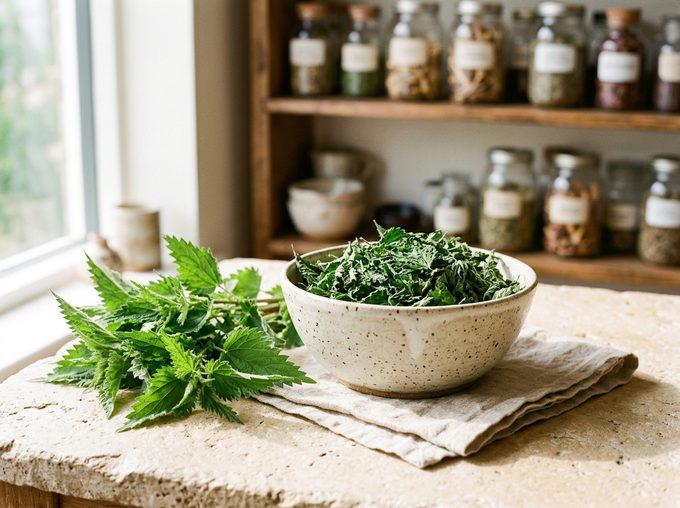
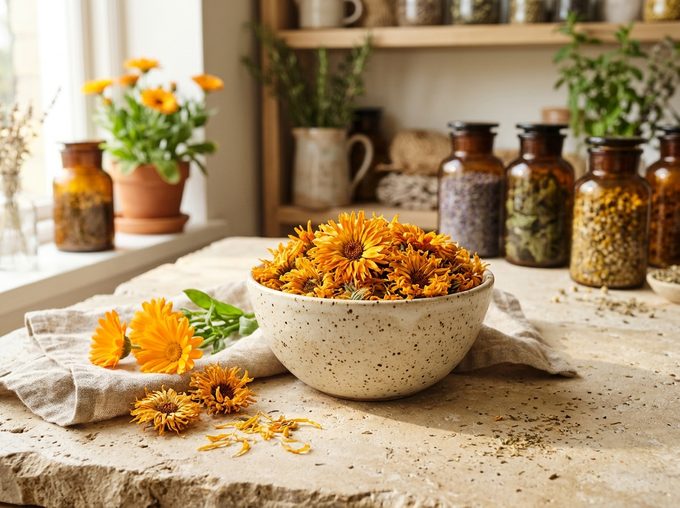
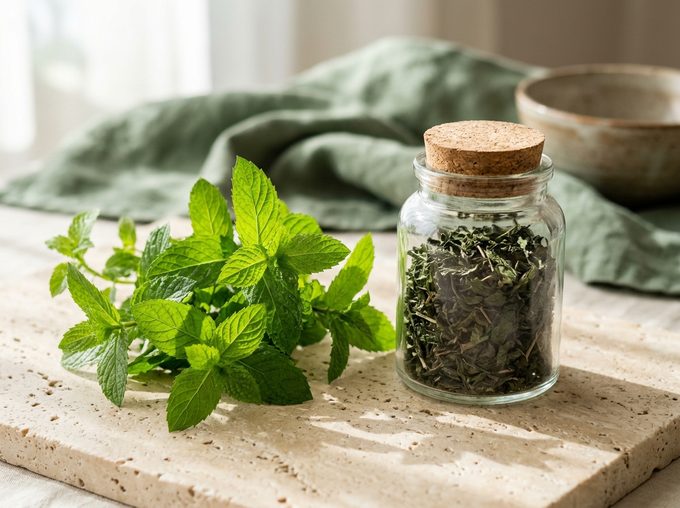
Everyday & kitchen uses: Steeped alongside stinging nettle, peppermint, and calendula as a mild infusion.
Standard preparation methods (compare all 50 steeping temperatures):
- Whole-Blossom Meadow Infusion (3 g – 4 g (3 to 4 whole dried purple flower heads or 2 tbsp) at 200°F (93°C)): 10–15 min covered
- Overnight Blossom Steep (1/2 cup dried red clover blossoms + 2 tbsp nettle leaf in 1 quart jar at Pour 205°F water, cover tightly): Steep 4–6 hours, strain, and chill
- Red Clover & Mint Iced Tea (2 tbsp red clover + 1 tbsp spearmint or lemon balm at 200°F steep 10 min): Serve over ice with a slice of lemon
Cautions & interactions +
General information, not medical advice. Check with a doctor or pharmacist before using this herb if you are pregnant, breastfeeding, giving it to a child, taking medication or managing a health condition.
Who should use caution: Red clover supplements may be unsafe during pregnancy or breastfeeding. It has estrogen-like activity, so avoid it with a hormone-sensitive cancer and use caution with hormone therapy or contraceptives. It may increase bleeding risk with warfarin and other blood thinners or antiplatelet drugs, and case reports describe bleeding in the brain. One patient on methotrexate had severe vomiting and pain. Extracts were used for up to 2 years in studies, but long-term safety is not established. Never use browned or moldy blossoms: mold in spoiled sweet clover hay produced dicoumarol, the anticoagulant that led to warfarin.
Species & lookalike verification: Red Clover (Trifolium pratense, family Fabaceae) has rose-magenta globe-shaped flower heads sitting directly above three oval leaflets marked with a pale V-shaped water-mark chevron. Compare with White Dutch Clover (Trifolium repens, smaller white flower balls on creeping stems, also edible) and Yellow/White Sweet Clover (Melilotus officinalis, a tall upright plant up to 4 feet high that smells strongly of vanilla-coumarin).
Cupboard storage (amber glass guide): Dry and store carefully; whole clover heads must remain dry so their dense florets stay rose-purple rather than turning brown.
Sources & further reading +
Why is it so important that dried Red Clover blossoms are pink-purple and never brown or musty?
Red clover contains sweet-smelling coumarin compounds. The anticoagulant dicoumarol was found in moldy, wet sweet clover hay, a related plant, so clover that has molded or browned during drying should not be used. Properly dehydrated apothecary red clover retains its vibrant magenta-pink color and fresh honey scent.
Why do Red Clover blossoms taste naturally sweet?
Each globe-shaped Red Clover head is actually a dense cluster of 80 to 120 tiny tubular pea-family florets, and the base of every single tube holds a droplet of wildflower nectar designed for long-tongued bumblebees. When you steep the whole flower heads, that dried nectar dissolves into your cup.
Should you include the top green leaves attached to the Red Clover flower head?
Yes—pharmacognosy studies show that the upper trifoliate leaves cradling the blossom contain high levels of the isoflavones biochanin A and formononetin alongside the blossom's phenolic glycosides.
Can you add fresh Red Clover florets to summer salads?
Absolutely! Pinching the individual pink tubular florets off the central stem and scattering them over summer greens or fruit salads adds a burst of honey sweetness.
Companion Moss & Thyme guides & tools:
- Herbarium Journal: Evening Botanical Tea Rituals & Blending →
- Equipment Guide: Best Loose-Leaf Tea Infusers & Gooseneck Kettles →
- Interactive Calculator: Interactive 3-Part Tea Blend Synergy Builder →
Botanical references:
- Royal Botanic Gardens, Kew — Plants of the World Online: Trifolium pratense Taxonomic Record ↗
- PubChem / NIH National Library of Medicine: Phytochemical Profile (Isoflavones (Biochanin A) ↗
Health and safety sources:
- NCCIH: Red Clover ↗
- MSK: Red Clover ↗
- PMC: Herbal products used in menopause and for gynecological disorders ↗
- PMC: Antagonists of vitamin K, coumarin drugs ↗
Safety notes checked against the sources below on November 5, 2026.
See the herb in context.
Watch our video guide The Most Powerful Herbs in the World, Explained and explore the plants it introduces.
Explore another herb.