Stinging Nettle Leaf
Mineral-Dense Emerald Spring Leaf of Long Overnight Infusions.
Explore the common forms, learn a little about the plant, and choose what suits your cupboard.
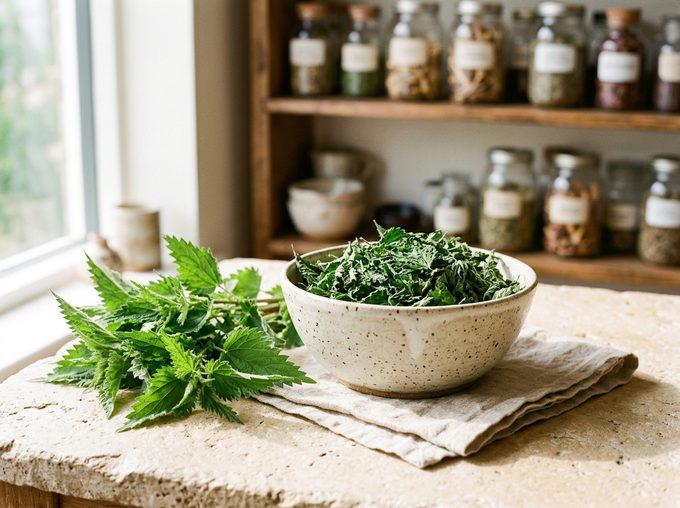
Whole cut-and-sifted stinging nettle leaf leaves for steeping and blending.
A little about stinging nettle leaf.
The plant
Deeply savory, chlorophyll-green, mineral-salty, and broth-like with zero bitterness. Native to Temperate Regions Worldwide (Urticaceae).
The forms
Most often prepared as a standard cup leaf infusion using 3 g (1.5 to 2 tbsp dried cut leaf) at 200°F–205°F (93°C–96°C) (10–15 min covered).
Before you choose
Check the label for the Latin name (Urtica dioica), and choose the form that suits your cupboard.
Traditional uses & research +
Botanical taxonomy: Urtica dioica (Urticaceae) · Tradition: Nutritive & Berry Tonics · Key constituents: Chlorophyll, Silica, Iron, Calcium, Quercetin, Rutin.
Curated collections: Seasonal Harvest & Winter Apothecary · Adaptogenic Roots, Berries & Fungi · Beginner's Home Apothecary Starter Shelf · Seasonal almanac: March Almanac (Early Spring Mineral Greens & Bitters) · April Almanac (Spring Garden Awakening & Young Leaves).
Traditional background: Harvested with gloves every spring across Northern Europe for nettle soup, cordage fiber, and deep green mineral infusions.
Everyday & kitchen uses: Steeped with peppermint and red clover for a savory iced or hot infusion, or cooked into spring pestos and broths.
Standard preparation methods (compare all 50 steeping temperatures):
- Standard Cup Leaf Infusion (3 g (1.5 to 2 tbsp dried cut leaf) at 200°F–205°F (93°C–96°C)): 10–15 min covered
- Nourishing Overnight Mineral Infusion (10 g (approx. 1/3 cup dried nettle leaf) in 1 quart boiling water at Pour boiling water in mason jar, cap tightly): Steep 4–8 hours at room temp, strain, and refrigerate (drink chilled within 36 hours)
- Nettle-Peppermint Spring Iced Tea (3 tbsp nettle + 1 tbsp peppermint per quart at 200°F steep, then chill): Peppermint brightens nettle's deep green mineral body
Cautions & interactions +
General information, not medical advice. Check with a doctor or pharmacist before using this herb if you are pregnant, breastfeeding, giving it to a child, taking medication or managing a health condition.
Who should use caution: Fresh leaves sting, so wear gloves, and never eat them raw. EU regulators do not recommend nettle leaf in pregnancy or breastfeeding because safety is not established, or under age 12, and rule it out where fluid intake must be limited, as in severe heart or kidney disease. Nausea, diarrhea and skin reactions can occur. German labeling warns its vitamin K could weaken warfarin, though no interaction has been reported. EU traditional use is limited to 2 to 4 weeks at 8 to 12 g daily. Root products for urinary symptoms need a medical check first.
Species & lookalike verification: Stinging Nettle (Urtica dioica, family Urticaceae) has opposite, heart-to-lance-shaped serrated leaves armed with hollow silica stinging hairs (trichomes) and small green wind-pollinated catkin clusters. Its common non-stinging lookalikes are White Dead-Nettle (Lamium album) and Purple Dead-Nettle (Lamium purpureum), which belong to the Mint family (Lamiaceae) and have square stems and hooded white/pink flowers.
Cupboard storage (amber glass guide): Store in airtight dark containers; high-chlorophyll leaves fade if exposed to light.
Sources & further reading +
Will dried Stinging Nettle leaf sting my mouth when I drink it as tea?
It should not. Drying and processing destroy the stinging hairs on fresh leaves, so properly dried nettle leaf does not sting when brewed.
Why shouldn't you harvest wild Stinging Nettle leaves after the plant flowers in late summer?
Wait until spring or cut the plant back for fresh second-growth! Once Urtica dioica produces flowers and dangling seed catkins, the older leaves accumulate microscopic gritty mineral concretions called cystoliths, which traditional herbalists avoid out of a belief that they are harsh on the urinary tract. This is not well studied.
Why do some herbalists steep Nettle Leaf overnight in a quart mason jar?
A 10-minute cup gives a lighter flavor, while a 4-to-8-hour covered mason-jar infusion makes a darker, stronger broth. Herbalists value it for minerals, but how much reaches the cup and the body is not well established. Old recipes can call for a full ounce, well above the 8 to 12 g daily amount in the EU monograph, so use less.
Are Nettle Leaf, Nettle Root, and Nettle Seed used for the same thing?
No—in herbalism, one plant yields three distinct preparations: Nettle Leaf is a traditional spring tonic; Nettle Seed is a traditional tonic in some herbal practice; and Nettle Root is traditionally used for urinary symptoms linked to an enlarged prostate, after a doctor has ruled out serious conditions. Evidence for these uses is limited.
Companion Moss & Thyme guides & tools:
- Herbarium Journal: Evening Botanical Tea Rituals & Blending →
- Equipment Guide: Best Loose-Leaf Tea Infusers & Gooseneck Kettles →
- Interactive Calculator: Interactive 3-Part Tea Blend Synergy Builder →
Botanical references:
- Royal Botanic Gardens, Kew — Plants of the World Online: Urtica dioica Taxonomic Record ↗
- PubChem / NIH National Library of Medicine: Phytochemical Profile (Chlorophyll) ↗
Health and safety sources:
- EMA HMPC: Community herbal monograph, nettle leaf ↗
- EMA HMPC: EU herbal monograph, nettle root ↗
- EMA HMPC: Assessment report, nettle leaf ↗
- LiverTox: Stinging Nettle ↗
Safety notes checked against the sources below on November 5, 2026.
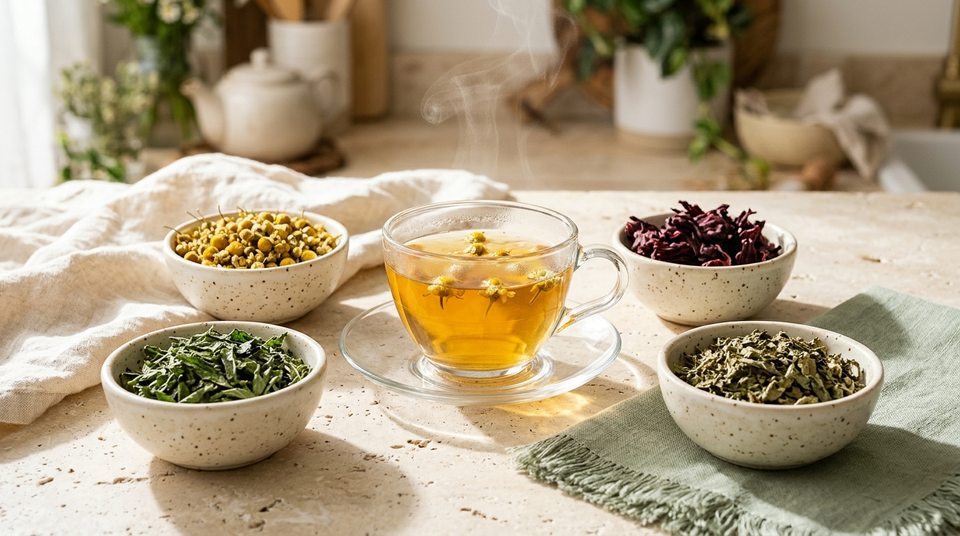
See the herb in context.
Watch our video guide The Most Powerful Herbs in the World, Explained and explore the plants it introduces.
Explore another herb.