✦ ♑ JANUARY APOTHECARY ALMANAC • WINTER SIMMER & DECOCTION
January Herbal Almanac: Midwinter Roots & Pine Needles
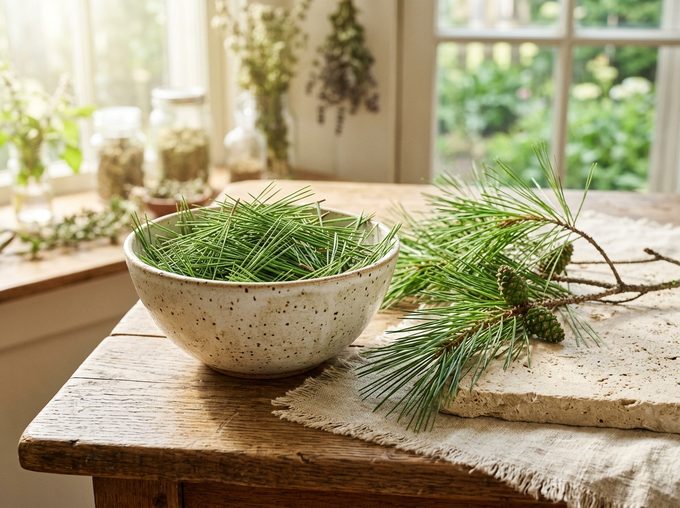
Across the northern temperate zone, deciduous perennials lie dormant beneath frost while evergreen conifers—led by five-needle Eastern White Pine—concentrate protective ascorbic acid and alpha-pinene resins inside their needles to prevent cellular freezing.
🌿 January Harvesting, Foraging & Curing Task
Audit your amber glass root jars—January is the prime month for slow stovetop decoctions.
🍵 Signature January Recipe: Midwinter Ginger & Cinnamon Warmer
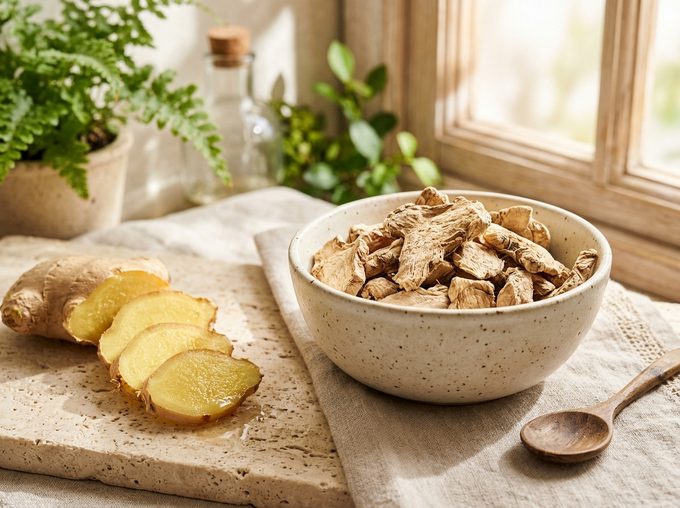
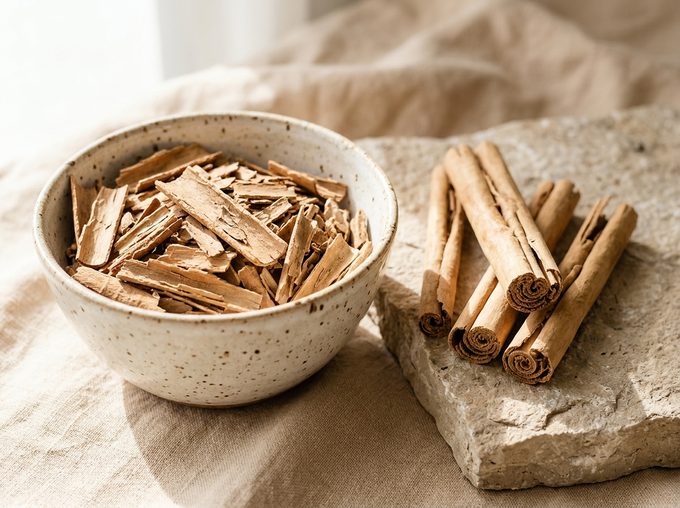
Steep 4 slices fresh Ginger + 1 crumbled Ceylon Cinnamon quill in 12 oz of 180°F water (covered) for 12 minutes. Strain and stir in 1 tsp raw maple syrup or honey.
JANUARY SPECIMEN MATRIX
Compare All 5 January Botanicals
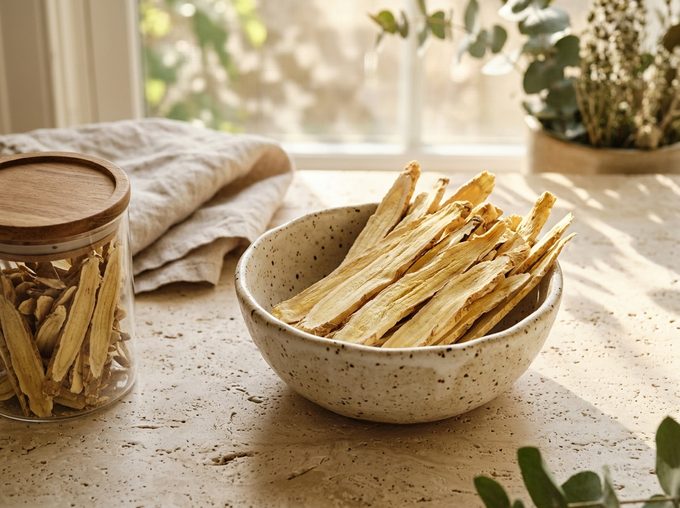
| Botanical & Binomial | Plant Part | Key Phytochemicals | Organoleptic Palate & Aroma | Dose & Steep (8 oz) |
|---|---|---|---|---|
| White Pine Needle Pinus strobus |
Fresh or gently dried green needles | Alpha-pinene, Beta-pinene, Shikimic acid, Vitamin C, Flavonoids | Crisp, bright, evergreen-citrus aroma. | Not for drinking Stovetop room aromatic only |
| Ginger Rhizome Zingiber officinale |
Fresh or dried rhizome | Gingerols (fresh), Shogaols (dried), Zingiberene | Fiery, pungent, citrusy-warm, and aromatic. | 2 g – 3 g (1 tsp dried) 205°F–212°F covered simmer · Simmer 10–15 min covered |
| Ceylon Cinnamon Cinnamomum verum |
Hand-rolled inner bark quills | Cinnamaldehyde, Eugenol, Proanthocyanidins (Low Coumarin) | Delicate, warm, citrus-floral, and complexly sweet without the harsh, tongue-burning red-hot bite of common supermarket cassia. | 1 whole 3-inch Ceylon quill 205°F–212°F covered simmer · Simmer 12–15 min |
| Astragalus Root Astragalus membranaceus |
Sliced dried 4-year root | Astragalosides (I–VII), Calycosin, Polysaccharides, Saponins | Mildly sweet, starchy, and pleasantly legume-earthy, reminiscent of mild roasted parsnip or sweet yellow split peas. | 5 g – 9 g 205°F–212°F low simmer · Simmer covered 25–35 min in water or soup stock |
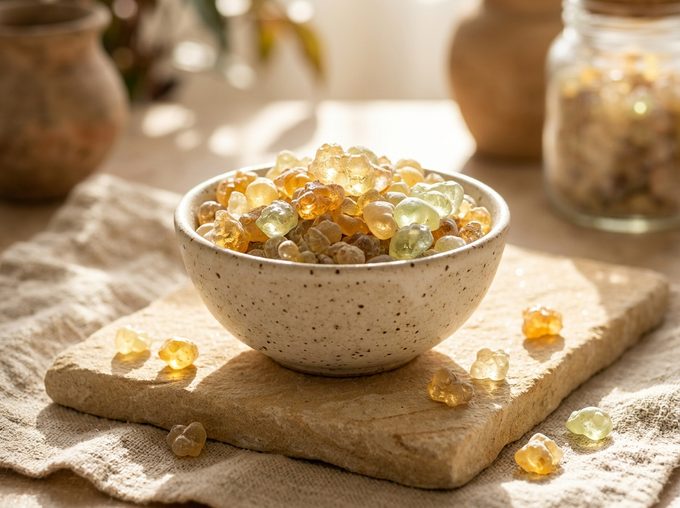
| Sacred Frankincense Boswellia sacra |
Dried oleogum resin tears | Boswellic acids (AKBA), Alpha-pinene, Incensole acetate, Limonene | Aromatically luminous, crisp Meyer-lemon citrus, fresh pine needle, and sweet balsamic honey-wood. | 1 to 2 pea-sized Hojari resin tears on a thin copper/aluminum plate over a tealight candle 250°F–320°F gentle radiant heat · Melts slowly over 45–60 min, releasing a lemon-pine vapor with little burnt smell; ventilate the room |
JANUARY ALMANAC Q&A
Frequently Asked Questions About January Herbal Craft
What is the best apothecary preparation method for January (Winter Simmer & Decoction)?
In January, Across the northern temperate zone, deciduous perennials lie dormant beneath frost while evergreen conifers—led by five-needle Eastern White Pine—concentrate protective ascorbic acid and alpha-pinene resins inside their needles to prevent cellular freezing. Because of these seasonal conditions, herbalists emphasize winter simmer & decoction—Audit your amber glass root jars—January is the prime month for slow stovetop decoctions.
How do you make the signature January herbal recipe (Midwinter Ginger & Cinnamon Warmer)?
Steep 4 slices fresh Ginger + 1 crumbled Ceylon Cinnamon quill in 12 oz of 180°F water (covered) for 12 minutes. Strain and stir in 1 tsp raw maple syrup or honey. Always store unused dried botanicals in airtight UV-blocking amber glass away from direct stove heat.
EXPLORE ALL 12 MONTHS OF THE BOTANICAL ALMANAC