Tinctures, oils & infusions.
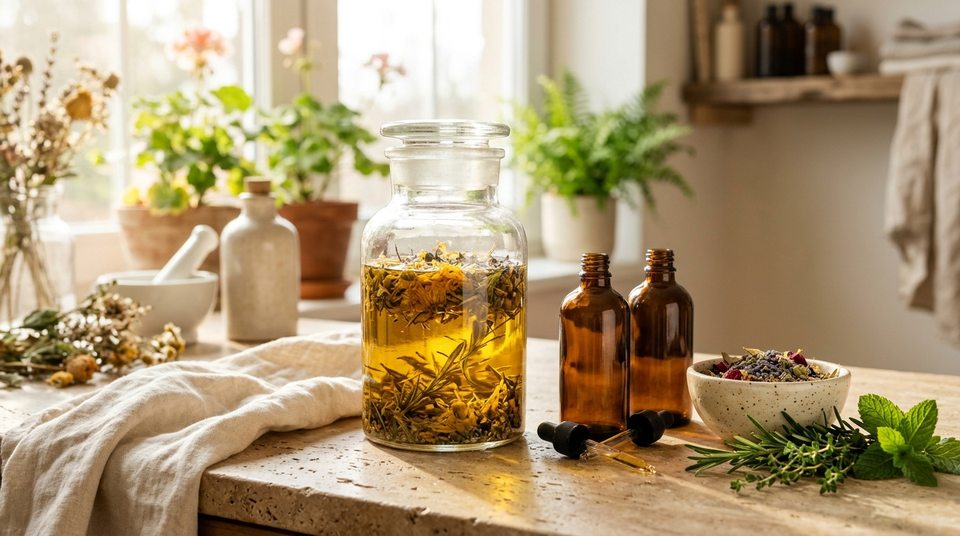
How concentrated liquid extracts, infused oils, and simmered root decoctions are prepared and chosen.
In this guide
A calm introduction to the essential tea herbs — from gentle floral infusions to bright, minty leaves and warming roots. Watch the video above, then explore the individual plants below.
- ✓The difference between flowers, leaves, roots, and berries
- ✓Loose herb vs. bagged tea — and when each makes sense
- ✓What to look for when choosing herbs for your cupboard
Herbs in this video.
Explore each plant mentioned in the guide and find the form that suits your cupboard.
Episode chapter notes & interactive timestamps (14:05) +
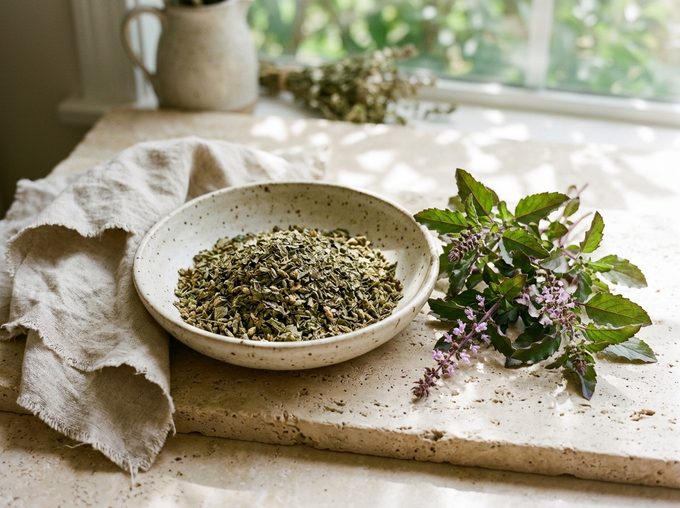
An aromatic leafy adaptogen combining warm clove (eugenol) and bright citrus notes that steeps easily in 6–10 minutes.
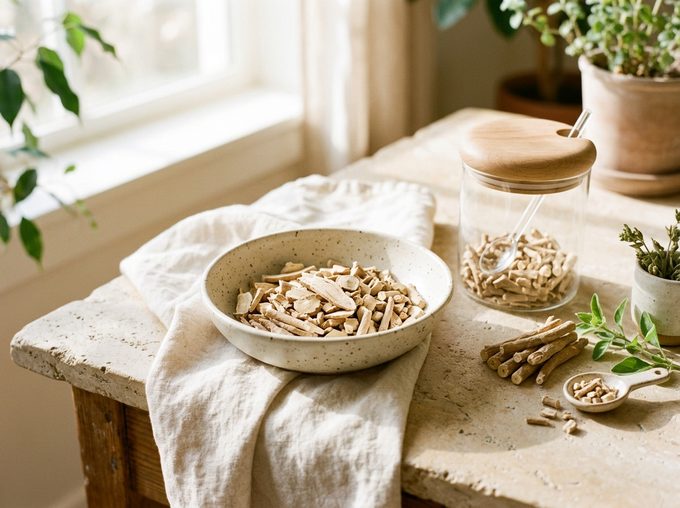
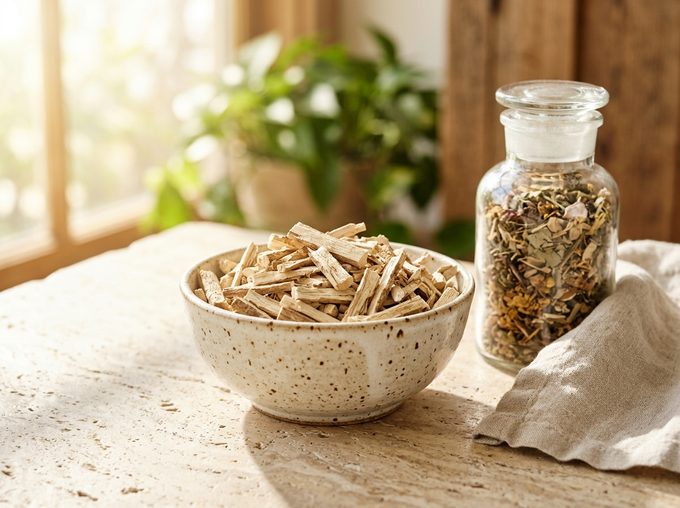
View Holy Basil (Tulsi) →Starchy buff-ivory root prized for steady composure; traditionally decocted or simmered in spiced milk.
View Ashwagandha Root →Rose-scented Arctic alpine rhizome containing rosavins and salidroside; brisk and best suited to morning infusions.
View Rhodiola Rosea →The original taiga root studied when the term 'adaptogen' was coined; simmer woody root chips for 20 minutes.
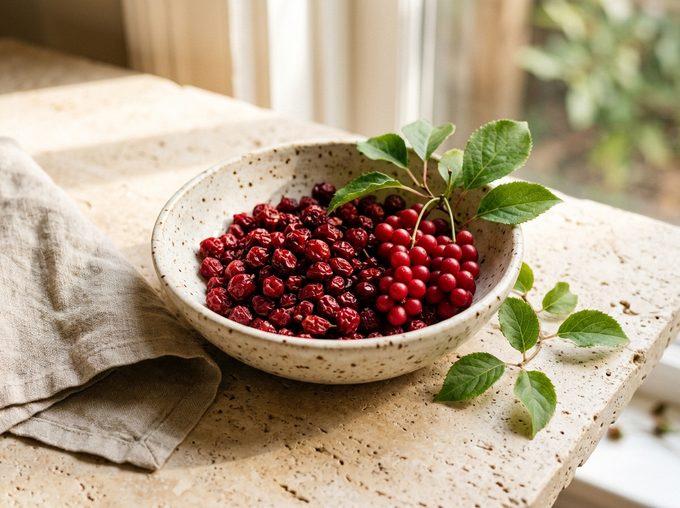
View Eleuthero Root →Wu Wei Zi—the ruby berry that carries all five classical flavors (sour, sweet, salty, bitter, and pungent).
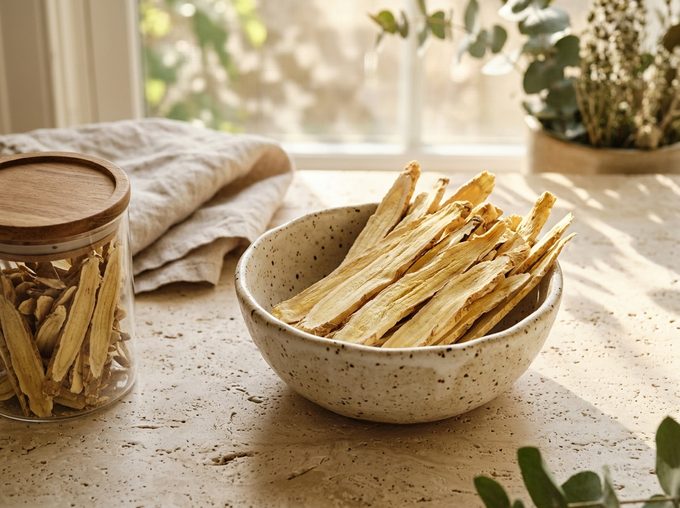
View Schisandra Berry →Sweet yellow tongue-blade root slices simmered directly into winter soup stocks, broths, and root decoctions.
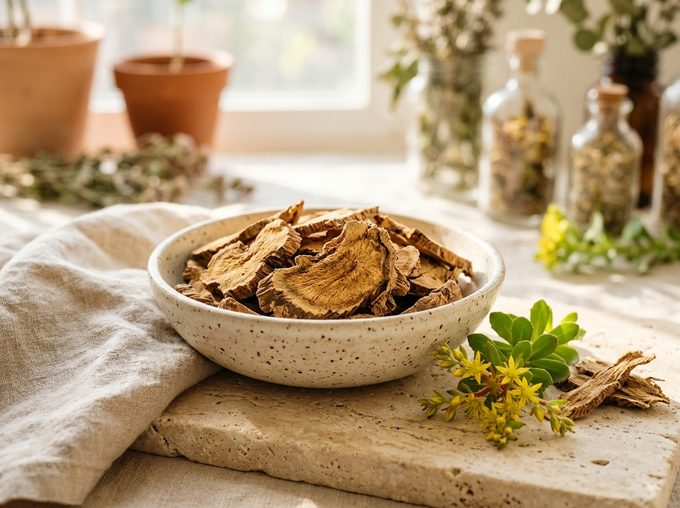
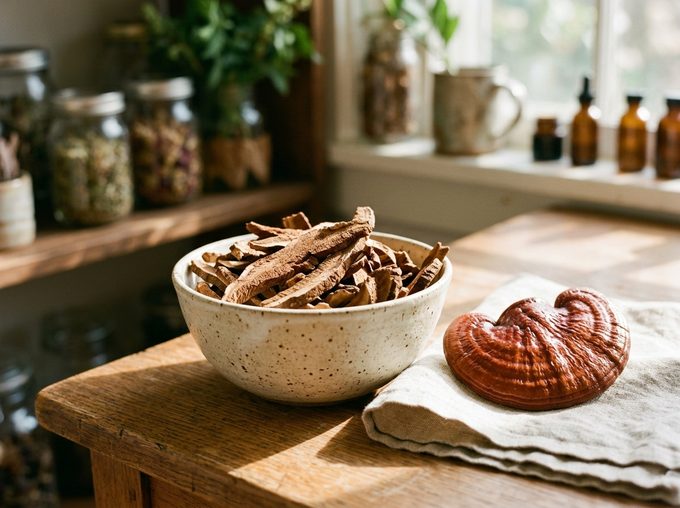
View Astragalus Root →Lacquered woodland shelf polypore rich in beta-glucans and bitter ganoderic triterpenes.
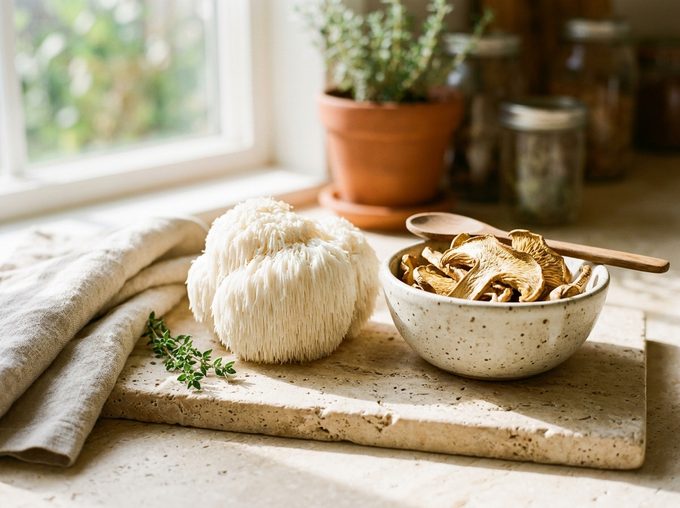
View Red Reishi →Cascading white tooth fungus used both as a gourmet culinary mushroom and a hot-water fruiting-body extract.
View Lion's Mane →Keep exploring.
All video guides →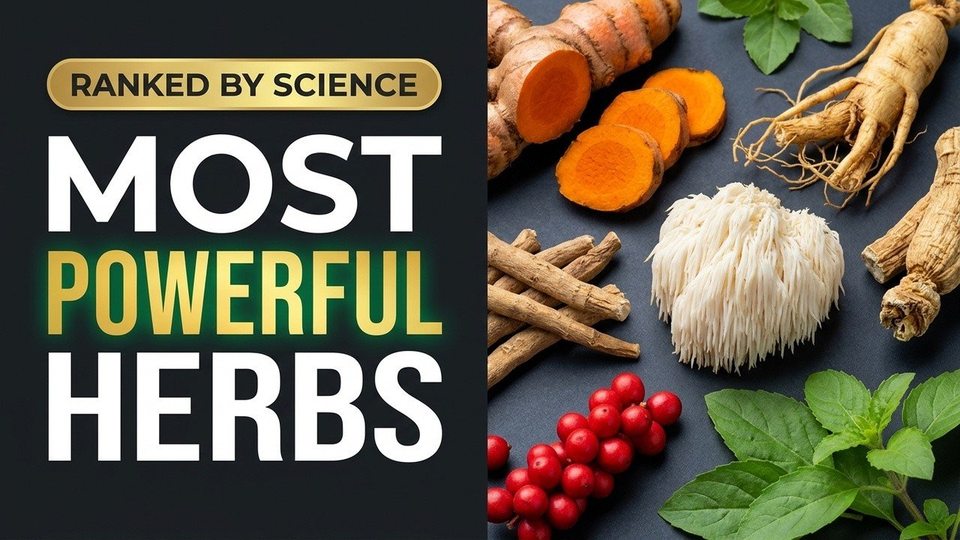
The most powerful herbs, explained
14 plants people have trusted for thousands of years — and what modern science found inside them.
Watch & explore →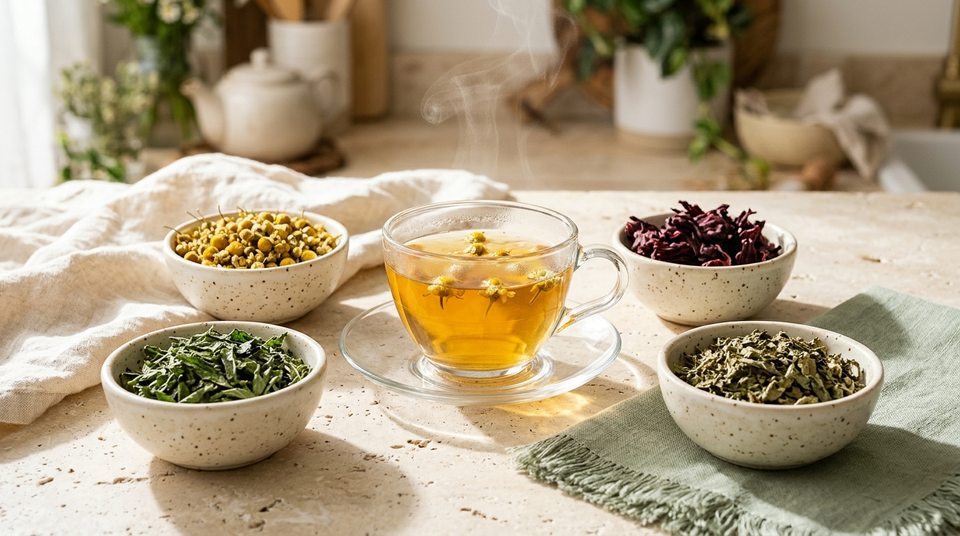
A closer look at tea herbs
Explore the plants behind the video and find the ones you want to try.
Watch & explore →