Rhodiola Rosea
Golden Root • Rose-Scented Arctic Alpine Rhizome.
Explore the common forms, learn a little about the plant, and choose what suits your cupboard.
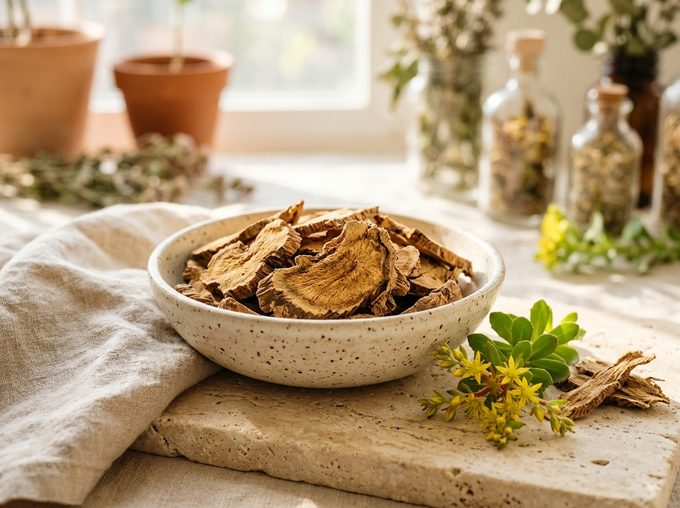
Dried rhodiola rosea pieces for simmering, decoctions, and jars.
A little about rhodiola rosea.
The plant
Astringent, brisk, and slightly bitter-mineral with a distinctive, natural Bulgarian rose-water aroma when freshly cut or steeped. Native to Arctic & Alpine Regions of Eurasia (Crassulaceae).
The forms
Most often prepared as a morning root decoction / steep using 1.5 g – 2.5 g (1 tsp sliced golden root) at 200°F–205°F (93°C–96°C) (Simmer gently 10 min or steep covered 15–20 min).
Before you choose
Check the label for the Latin name (Rhodiola rosea), and choose the form that suits your cupboard.
Traditional uses & research +
Botanical taxonomy: Rhodiola rosea (Crassulaceae) · Tradition: Adaptogens & Vitality · Key constituents: Rosavin, Rosarin, Rosin, Salidroside, Tyrosol.
Curated collections: Adaptogenic Roots, Berries & Fungi · Seasonal almanac: September Almanac (Autumn Equinox Berries & Prairie Cones).
Traditional background: Earned the name 'Rose Root' (rosea) because freshly cut rhizomes emit a delicate fragrance of Attar of Roses. Scandinavian and Siberian mountaineers steeped golden root during long high-altitude treks.
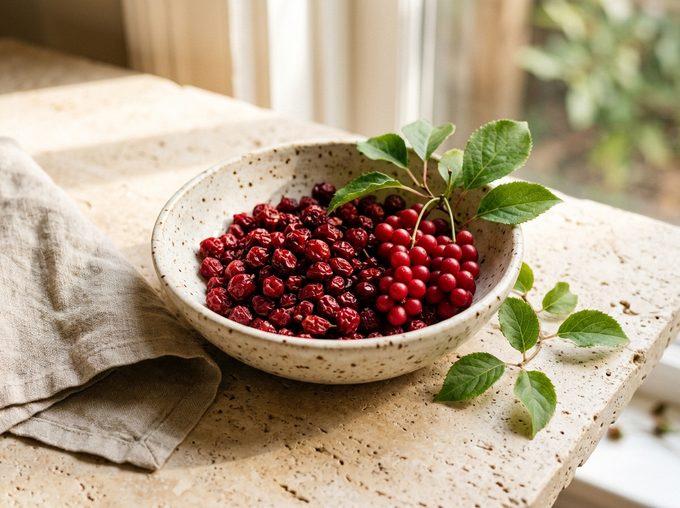
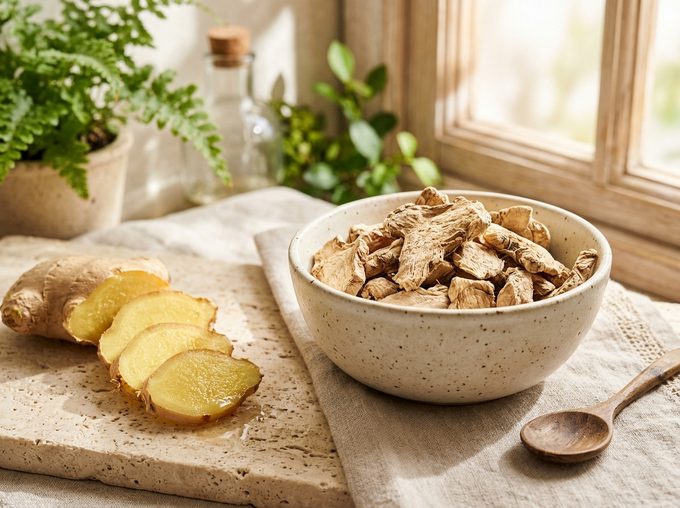
Everyday & kitchen uses: Brewed as a morning tea with schisandra berry or ginger, or prepared as a dual-extracted root tincture.
Standard preparation methods (compare all 50 steeping temperatures):
- Morning Root Decoction / Steep (1.5 g – 2.5 g (1 tsp sliced golden root) at 200°F–205°F (93°C–96°C)): Simmer gently 10 min or steep covered 15–20 min
- Arctic Morning Tisane (1 tsp rhodiola root + 1 tsp rosemary + 1 tsp rosehips at 200°F (93°C)): Steep covered 12 min (enjoy before noon)
- Apothecary Tincture (1:5 dried root in 40%–50% vodka/brandy at Dark glass maceration): Steep 4 weeks; turns a deep ruby-rose color
Cautions & interactions +
General information, not medical advice. Check with a doctor or pharmacist before using this herb if you are pregnant, breastfeeding, giving it to a child, taking medication or managing a health condition.
Who should use caution: Rhodiola is possibly safe for up to 12 weeks; longer use is unknown, and European regulators advise seeing a doctor if symptoms last beyond 2 weeks. Little is known about safety in pregnancy or breastfeeding, and it is not recommended under age 18. Side effects may include dizziness, headache, insomnia, dry mouth or excess saliva, nausea, diarrhea and rash. Interactions are reported with losartan, and may occur with antidepressants (one case of fast, irregular heartbeat), warfarin, phenytoin and blood pressure drugs. It binds estrogen receptors, so use caution with estrogen-sensitive breast cancer. Safety in bipolar disorder has not been established.
Species & lookalike verification: Over 20 species of Rhodiola grow across Eurasian mountains (such as Rhodiola crenulata and R. sacra), which contain salidroside but lack the three signature 'rosavins' (rosavin, rosin, and rosarin) unique to true Rhodiola rosea. True Rhodiola rosea is named for the unmistakable rose-attar scent of its freshly cut rhizome.
Cupboard storage (amber glass guide): Store in cool, dark glass to preserve the rose-like aromatic glycosides.
Sources & further reading +
Why is Rhodiola rosea called 'Rose Root' when it isn't related to roses?
Rhodiola belongs to the stonecrop family (Crassulaceae), not the rose family. Carl Linnaeus named it Rhodiola rosea because its underground rhizome contains geraniol and myrtenol glycosides that smell exactly like fresh rose petals when sliced or steeped.
Why should Rhodiola rosea only be taken in the morning?
Rhodiola rosea is described as a mild stimulant, and insomnia is a reported side effect, so it is usually suggested for the morning. There isn't enough reliable evidence to say whether it helps alertness or stamina.
How do you verify true Rhodiola rosea vs. cheaper Rhodiola crenulata?
All Rhodiola species contain salidroside, but only true Rhodiola rosea contains the cinnamyl alcohol glycosides collectively called rosavins (rosavin, rosin, rosarin) in a natural ~3:1 ratio of rosavins to salidroside.
Why does Rhodiola tea feel puckery and dry on the palate?
Arctic alpine plants produce high concentrations of protective polyphenols and gallotannins to survive freezing winds and intense UV radiation. Adding a teaspoon of honey or blending with mucilaginous marshmallow root balances its astringency.
Companion Moss & Thyme guides & tools:
- Herbarium Journal: Covered Infusions vs. Simmered Decoctions →
- Equipment Guide: Best Mortars, Pestles & Apothecary Grinders →
- Interactive Calculator: Infusion vs. Decoction & Safety Checker →
Botanical references:
- Royal Botanic Gardens, Kew — Plants of the World Online: Rhodiola rosea Taxonomic Record ↗
- PubChem / NIH National Library of Medicine: Phytochemical Profile (Rosavin) ↗
Health and safety sources:
- NCCIH: Rhodiola ↗
- EMA: EU herbal monograph, Rhodiola rosea ↗
- MSK: Rhodiola ↗
- PMC: Mood disorders and complementary and alternative medicine ↗
Safety notes checked against the sources below on November 5, 2026.
See the herb in context.
Watch our video guide The Most Powerful Herbs in the World, Explained and explore the plants it introduces.
Explore another herb.