Holy Basil (Tulsi)
The Incomparable One • Clove-and-Citrus Sacred Leaf of India.
Explore the common forms, learn a little about the plant, and choose what suits your cupboard.
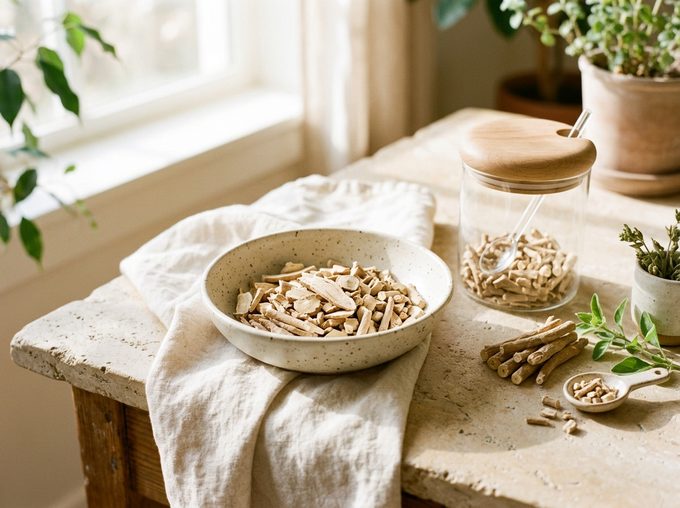
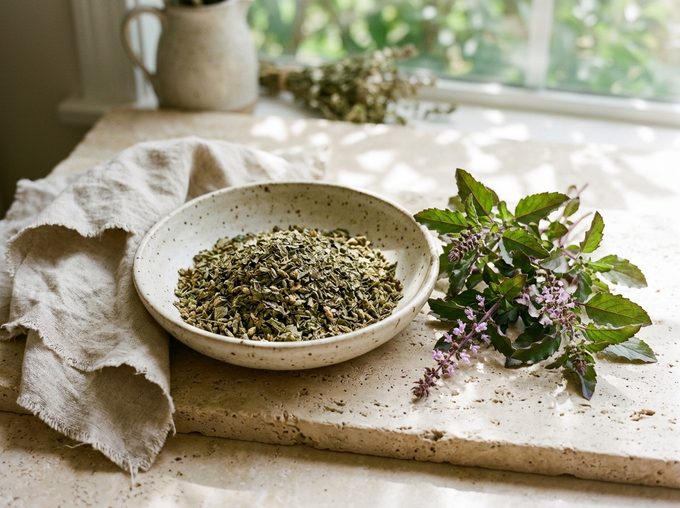
Whole dried holy basil (tulsi) flowers for steeping and infusions.
A little about holy basil (tulsi).
The plant
Warming, spicy-clove, peppery, and subtly floral-citrus with a complex, tea-like body. Native to Indian Subcontinent (Lamiaceae (Mint Family)).
The forms
Most often prepared as a daily sacred tulsi infusion using 2 g – 3 g (1.5 tbsp dried leaf & blossom) at 200°F (93°C) (7–10 min covered).
Before you choose
Check the label for the Latin name (Ocimum tenuiflorum), and choose the form that suits your cupboard.
Traditional uses & research +
Botanical taxonomy: Ocimum tenuiflorum (Lamiaceae (Mint Family)) · Tradition: Adaptogens & Vitality · Key constituents: Eugenol, Ursolic acid, Rosmarinic acid, Ocimenosides.
Curated collections: Adaptogenic Roots, Berries & Fungi · Evening Calm & Bedtime Infusions · Beginner's Home Apothecary Starter Shelf · Seasonal almanac: July Almanac (High-Summer Mint, Basil & Meadow Nervines).
Traditional background: Grown in courtyard shrines across India for millennia as Tulsi ('The Incomparable One'), its three primary varieties—Rama, Krishna, and Vana—are often blended together for a complex aromatic infusion.
Everyday & kitchen uses: Steeped daily as a fragrant solo herbal tea, or blended with rose petals, ginger, and cardamom.
Standard preparation methods (compare all 50 steeping temperatures):
- Daily Sacred Tulsi Infusion (2 g – 3 g (1.5 tbsp dried leaf & blossom) at 200°F (93°C)): 7–10 min covered
- Tulsi-Rosehip-Ginger Chai (1 tbsp tulsi + 1 tsp grated ginger + 2 crushed cardamom pods at 205°F (96°C)): 10 min covered
- Iced Summer Tulsi-Hibiscus (2 tbsp tulsi + 1 tbsp hibiscus per quart water at 200°F steep, then chill): Steep 8 min hot, strain over ice
Cautions & interactions +
General information, not medical advice. Check with a doctor or pharmacist before using this herb if you are pregnant, breastfeeding, giving it to a child, taking medication or managing a health condition.
Who should use caution: Tulsi is a common household tea in India, and human trials of up to 13 weeks reported few side effects, mainly occasional nausea, but most were small and long-term safety is unknown. In rats, tulsi leaf extract reduced implantation and live fetuses and lowered sperm counts, so avoid medicinal amounts when trying to conceive or during pregnancy. Breastfeeding safety is not well studied. Some constituents have antiplatelet activity in lab work, so take care with anticoagulants. Tulsi may lower blood sugar, which matters if you take diabetes medicines.
Species & lookalike verification: In Ayurveda, three main cultivated varieties are blended or steeped individually: (1) Rama Tulsi (Ocimum tenuiflorum, green leaves, mellower and sweeter); (2) Krishna / Shyama Tulsi (Ocimum tenuiflorum, purple-flushed leaves, crisp and peppery-clove); and (3) Vana Tulsi (Ocimum gratissimum, wild forest basil, higher in eugenol and lemon notes). All three are distinct from Italian culinary Sweet Basil (Ocimum basilicum).
Cupboard storage (amber glass guide): Keep away from light and air to protect its rich eugenol and ursolic acid aroma.
Sources & further reading +
What is the difference between Rama, Krishna, and Vana Tulsi?
Rama Tulsi has bright green leaves and a smoother, sweeter clove-anise flavor; Krishna Tulsi has dark purple leaves rich in anthocyanins with a bolder, peppery bite; and Vana Tulsi ('Wild Forest Tulsi') is a taller perennial species (Ocimum gratissimum) with bright lemon-eugenol notes. Many artisan blends combine all three.
Does Holy Basil (Tulsi) contain caffeine?
No—Tulsi is 100% caffeine-free, even though its complex, full-bodied flavor and mild tannin structure make it one of the most satisfying herbal replacements for black or green tea.
Why is Tulsi considered the easiest traditional adaptogen to make into tea?
Most herbs traditionally called adaptogens (like Ashwagandha, Eleuthero, Astragalus, and Reishi) are dense woody roots or fungi that are usually simmered for 20+ minutes. Tulsi is an aromatic leaf and flower that makes a fragrant cup in about 7 minutes in a simple teapot.
Can I grow Holy Basil in a temperate summer garden?
Yes! Although perennial in tropical India, Rama and Krishna Tulsi grow vigorously as warm-season annuals alongside tomatoes and culinary basil once night temperatures stay above 55°F.
Companion Moss & Thyme guides & tools:
- Herbarium Journal: Evening Botanical Tea Rituals & Blending →
- Equipment Guide: Best Loose-Leaf Tea Infusers & Gooseneck Kettles →
- Interactive Calculator: Interactive 3-Part Tea Blend Synergy Builder →
Botanical references:
- Royal Botanic Gardens, Kew — Plants of the World Online: Ocimum tenuiflorum Taxonomic Record ↗
- PubChem / NIH National Library of Medicine: Phytochemical Profile (Eugenol) ↗
Health and safety sources:
- Systematic review: Clinical efficacy and safety of tulsi in humans (PMC5376420) ↗
- Review: Ayurvedic herbs in female reproductive health (PMC10981444) ↗
- Review: Phytochemistry and bioactivity of Ocimum tenuiflorum (PMC11521583) ↗
Safety notes checked against the sources below on November 5, 2026.
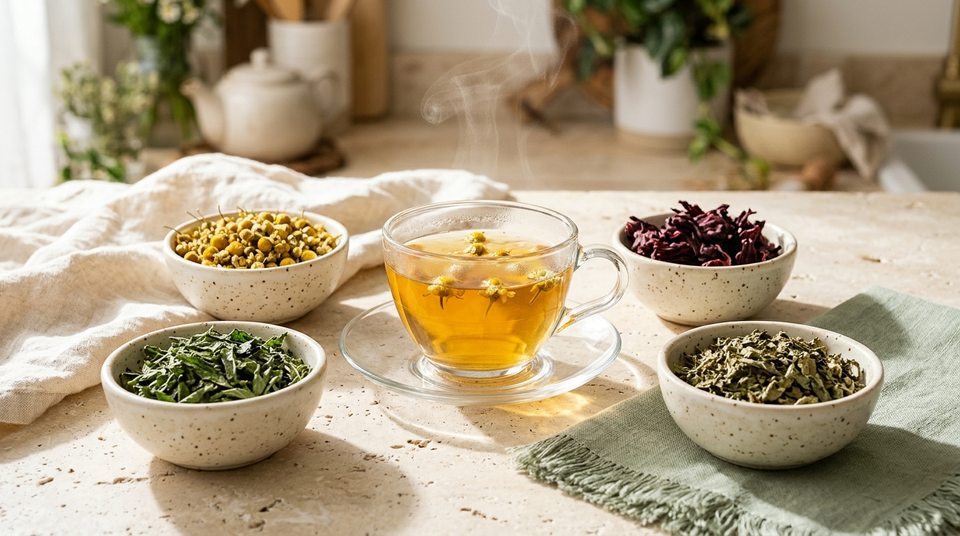
See the herb in context.
Watch our video guide The Most Powerful Herbs in the World, Explained and explore the plants it introduces.
Explore another herb.