Ashwagandha Root
Winter Cherry • Premier Ayurvedic Rasayana Root.
Explore the common forms, learn a little about the plant, and choose what suits your cupboard.
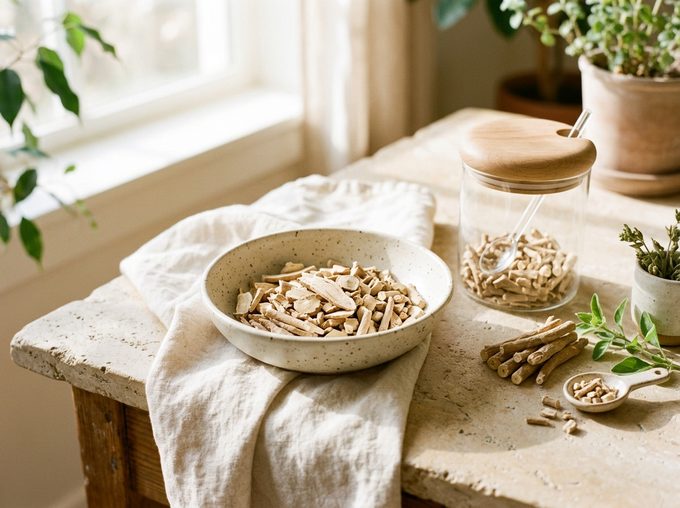
Dried ashwagandha root pieces for simmering, decoctions, and jars.
A little about ashwagandha root.
The plant
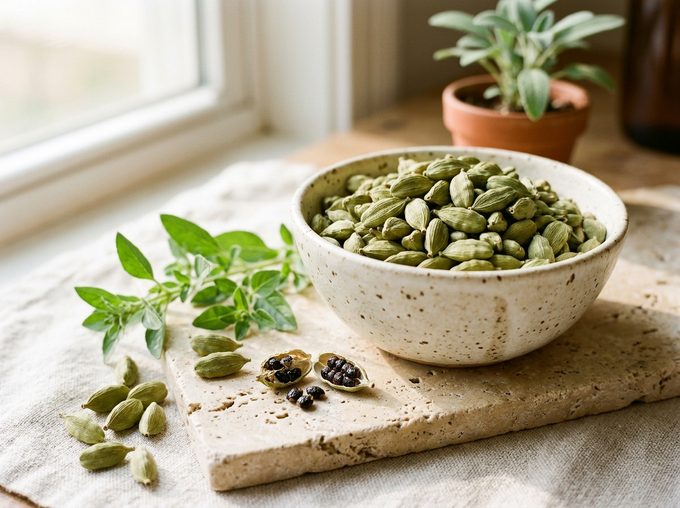
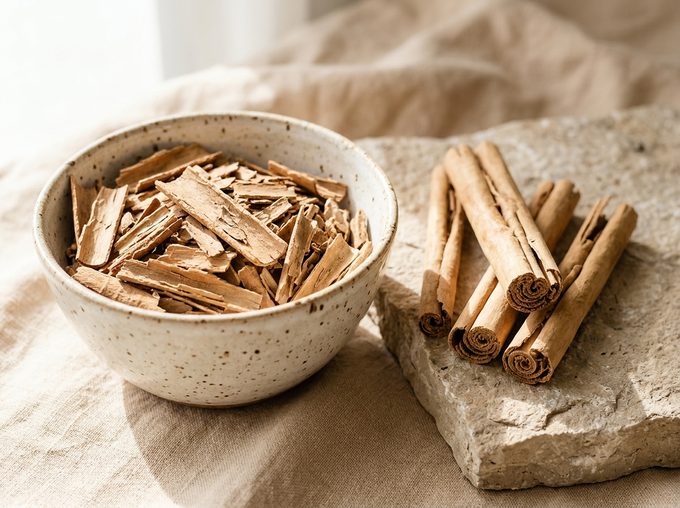
Earthy, starchy, slightly malty, and mildly bitter-astringent with a warm root body that pairs naturally with milk, ghee, cardamom, and cinnamon. Native to India, Middle East & North Africa (Solanaceae).
The forms
Most often prepared as a simmered root decoction using 3 g – 5 g (1 tbsp dried cut root pieces) at 205°F–212°F low simmer (Simmer covered 15–20 min in 10 oz water, then strain).
Before you choose
Check the label for the Latin name (Withania somnifera), and choose the form that suits your cupboard.
Traditional uses & research +
Botanical taxonomy: Withania somnifera (Solanaceae) · Tradition: Adaptogens & Vitality · Key constituents: Withanolides (Withaferin A, Withanolide D), Alkaloids.
Curated collections: Adaptogenic Roots, Berries & Fungi · Evening Calm & Bedtime Infusions · Beginner's Home Apothecary Starter Shelf · Seasonal almanac: November Almanac (Deep Autumn Adaptogens & Woodland Fungi).
Traditional background: Central to Ayurvedic Rasayana traditions for over 3,000 years, Withania somnifera is traditionally prized as a calming tonic, taken for daytime composure as well as evening rest.
Everyday & kitchen uses: Simmered into spiced evening 'moon milk' with nutmeg, cardamom, and cinnamon, or decocted as cut-and-sifted root pieces.
Standard preparation methods (compare all 50 steeping temperatures):
- Simmered Root Decoction (3 g – 5 g (1 tbsp dried cut root pieces) at 205°F–212°F low simmer): Simmer covered 15–20 min in 10 oz water, then strain
- Traditional Ayurvedic Moon Milk (1 tsp root powder or 1 tbsp cut root in 8 oz milk/oat milk + pinch cardamom & nutmeg at 190°F gentle stovetop simmer): Simmer 10–12 min, whisk in 1 tsp honey off the heat
- Broth / Soup Stock Addition (1 tbsp cut root pieces per quart of bone or vegetable broth at Low simmer): Simmer 30–60 min; strain out woody root pieces
Cautions & interactions +
General information, not medical advice. Check with a doctor or pharmacist before using this herb if you are pregnant, breastfeeding, giving it to a child, taking medication or managing a health condition.
Who should use caution: Avoid ashwagandha if you are pregnant or breastfeeding, have a thyroid or autoimmune disorder or hormone-sensitive prostate cancer, or are about to have surgery. It may interact with diabetes, blood pressure, immune-suppressing, sedative, anti-seizure and thyroid medicines. Liver injury is rare but has been linked to ashwagandha supplements, and people with existing liver disease have had severe cases. Side effects include sleepiness, stomach upset, diarrhea and vomiting. Use for up to 3 months may be safe; long-term safety is unknown. Safety in children is not well studied. It belongs to the nightshade family.
Species & lookalike verification: Ashwagandha (Withania somnifera, family Solanaceae) is occasionally called 'Indian Ginseng' or 'Winter Cherry' (for its papery orange-red lantern husks resembling tomatillos or cape gooseberries), though it is botanically unrelated to true Panax ginseng. When buying extracts, note the difference between 100% root-only extracts (like KSM-66) vs. root-and-leaf blends. Withaferin A is far more concentrated in the leaf than the root, but product content can vary, and root products have also been linked to liver injury.
Cupboard storage (amber glass guide): Keep root powder and cut root in moisture-tight jars; starchy roots absorb ambient humidity.
Sources & further reading +
Why can't you just steep cut Ashwagandha root in hot water for 5 minutes?
Ashwagandha root is a dense, starchy subterranean storage organ whose primary active compounds—withanolide steroidal lactones and root alkaloids—are locked inside fibrous cell walls and are partially fat-soluble. Simmering the root for 15–20 minutes (ideally with a splash of milk, coconut milk, or ghee) is the traditional method and may draw more from the root than a brief water pour-over, though this is not well measured.
Should you take Ashwagandha in the morning or at night?
Despite being an adaptogen, the species name 'somnifera' means 'sleep-inducing' in Latin. Ashwagandha is traditionally taken in the evening as well as the morning. Sleepiness is a reported side effect, so notice how it affects you before driving.
What is the difference between raw cut Ashwagandha root and KSM-66 powder?
Cut-and-sifted (C/S) root is the whole, unextracted dried root chopped into tea-sized nibs for simmering decoctions. KSM-66 is a concentrated 12:1 or 15:1 full-spectrum extract made exclusively from the root using milk/water extraction.
Who should avoid taking Ashwagandha?
Avoid it if you are pregnant or breastfeeding, have a thyroid or autoimmune disorder or hormone-sensitive prostate cancer, or are about to have surgery. People with existing liver disease, or who take diabetes, blood pressure, immune-suppressing, sedative, anti-seizure or thyroid medicines, need particular care.
Companion Moss & Thyme guides & tools:
- Herbarium Journal: Covered Infusions vs. Simmered Decoctions →
- Equipment Guide: Best Mortars, Pestles & Apothecary Grinders →
- Interactive Calculator: Infusion vs. Decoction & Safety Checker →
Botanical references:
- Royal Botanic Gardens, Kew — Plants of the World Online: Withania somnifera Taxonomic Record ↗
- PubChem / NIH National Library of Medicine: Phytochemical Profile (Withanolides (Withaferin A) ↗
Health and safety sources:
- NCCIH: Ashwagandha ↗
- Bjornsson et al.: Liver injury due to ashwagandha (PMC) ↗
- Ashwagandha-induced liver injury, case series from India (PMC) ↗
- Clinical implications of ashwagandha, side-effects review (PMC) ↗
Safety notes checked against the sources below on November 5, 2026.
See the herb in context.
Watch our video guide The Most Powerful Herbs in the World, Explained and explore the plants it introduces.
Explore another herb.