Marshmallow Root
Velvet Mallow • Cold-Infused Mucilage Root of Soothing Apothecary Syrups.
Explore the common forms, learn a little about the plant, and choose what suits your cupboard.
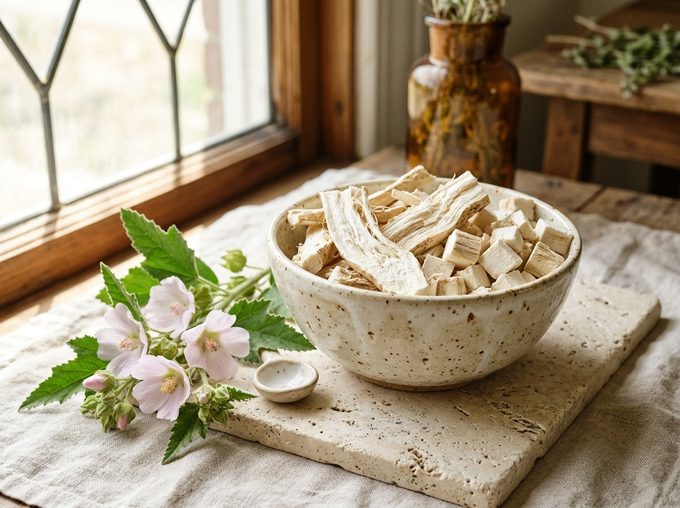
Dried marshmallow root pieces for simmering, decoctions, and jars.
A little about marshmallow root.
The plant
Subtly sweet, starchy-vanilla, and neutral with a remarkably thick, silky, velvety-slippery mouthfeel when cold-infused. Native to Europe, Western Asia & Salt Marshes (Malvaceae (Mallow Family)).
The forms
Most often prepared as a cold mucilage maceration (best method) using 6 g – 8 g (2 heaping tbsp cut peeled root) in 16 oz cool water at 60°F–72°F room temp or fridge (Steep 4–8 hours (or overnight) in a mason jar, then strain).
Before you choose
Check the label for the Latin name (Althaea officinalis), and choose the form that suits your cupboard.
Traditional uses & research +
Botanical taxonomy: Althaea officinalis (Malvaceae (Mallow Family)) · Tradition: Soothing Demulcents · Key constituents: Acidic polysaccharides (Mucilage), Pectin, Asparagine.
Curated collections: Aromatic Steams & Soothing Leaves · Digestive Bitters & Warming Spices · Seasonal almanac: October Almanac (First-Frost Taproots & Rosehips).
Traditional background: Before modern confections replaced it with gelatin, French pâte de guimauve (the original marshmallow) was whipped from the sweet, mucilaginous root sap of Althaea officinalis.
Everyday & kitchen uses: Cold-infused overnight to create a thick, silky demulcent base, then gently warmed with licorice, chamomile, or peppermint.
Standard preparation methods (compare all 50 steeping temperatures):
- Cold Mucilage Maceration (Traditional Method) (6 g – 8 g (2 heaping tbsp cut peeled root) in 16 oz cool water at 60°F–72°F room temp or fridge): Steep 4–8 hours (or overnight) in a mason jar, then strain
- Warm Soothing Throat Blend (Warm the strained cold infusion gently to 110°F + 1 tsp honey at Do not boil): Sip slowly to coat dry throat tissues
- Hot Tea Addition (1 tsp cut marshmallow root added to astringent teas (like rhodiola or sage) at 190°F steep): Softens dry tannins in other herbs
Cautions & interactions +
General information, not medical advice. Check with a doctor or pharmacist before using this herb if you are pregnant, breastfeeding, giving it to a child, taking medication or managing a health condition.
Who should use caution: Marshmallow root may delay the absorption of medicines taken at the same time, so as a precaution do not take it within 30 to 60 minutes before or after other medicines. Safety in pregnancy and breastfeeding has not been established, and use is not recommended. It is not recommended for children under 3 for throat use, or under 12 for stomach use. Avoid it if you are allergic to the plant. No side effects are known, but formal safety testing is limited. Seek care for breathing trouble, fever, thick discolored sputum, or symptoms lasting over 1 week (throat) or 2 weeks (stomach).
Species & lookalike verification: True Marshmallow is Althaea officinalis (family Malvaceae), native to European salt marshes. Its close garden cousins—Common Mallow (Malva sylvestris) and Hollyhock (Alcea rosea)—also contain soothing mucilage in their leaves and flowers, though Althaea officinalis root is the part used in European herbal medicine (about 5% to 11.6% mucilage polysaccharides).
Cupboard storage (amber glass guide): Must be stored strictly dry; peeled white root cubes readily absorb moisture from the air.
Sources & further reading +
Why must Marshmallow Root be steeped in cold water instead of boiling water?
Marshmallow root contains both water-soluble mucilage polysaccharides (galacturonorhamnans and arabinogalactans) AND heavy plant starches. Cold-water maceration is the traditional method in European herbal use. Herbalists say it draws out the silky mucilage with less of the cloudy starch.
Were original marshmallow candies really made from Marshmallow Root?
Yes! Beginning in 19th-century France ('Pâte de Guimauve'), confectioners whipped the thick, viscous cold-water extract of Althaea officinalis root with sugar and egg whites into a soothing throat confection before modern factories replaced the root with gelatin and corn syrup.
Why should you separate Marshmallow Root tea from other medicines by 30 to 60 minutes?
Its thick mucilage may delay the absorption of other medicines taken at the same time, so European regulators advise separating them as a precaution.
How do you know when your cold-steeped Marshmallow Root is ready?
After 4 to 6 hours in cool water, the water will turn pale golden-amber and take on a noticeably thicker, silky-viscous texture—similar to thin egg white or aloe vera juice—when poured through a strainer.
Companion Moss & Thyme guides & tools:
- Herbarium Journal: Covered Infusions vs. Simmered Decoctions →
- Equipment Guide: Best Mortars, Pestles & Apothecary Grinders →
- Interactive Calculator: Infusion vs. Decoction & Safety Checker →
Botanical references:
- Royal Botanic Gardens, Kew — Plants of the World Online: Althaea officinalis Taxonomic Record ↗
- PubChem / NIH National Library of Medicine: Phytochemical Profile (Acidic polysaccharides (Mucilage)) ↗
Health and safety sources:
- EMA HMPC: Althaeae radix ↗
- EMA: EU herbal monograph, Althaea officinalis radix ↗
- EMA: Assessment report, Althaea officinalis radix ↗
Safety notes checked against the sources below on November 5, 2026.
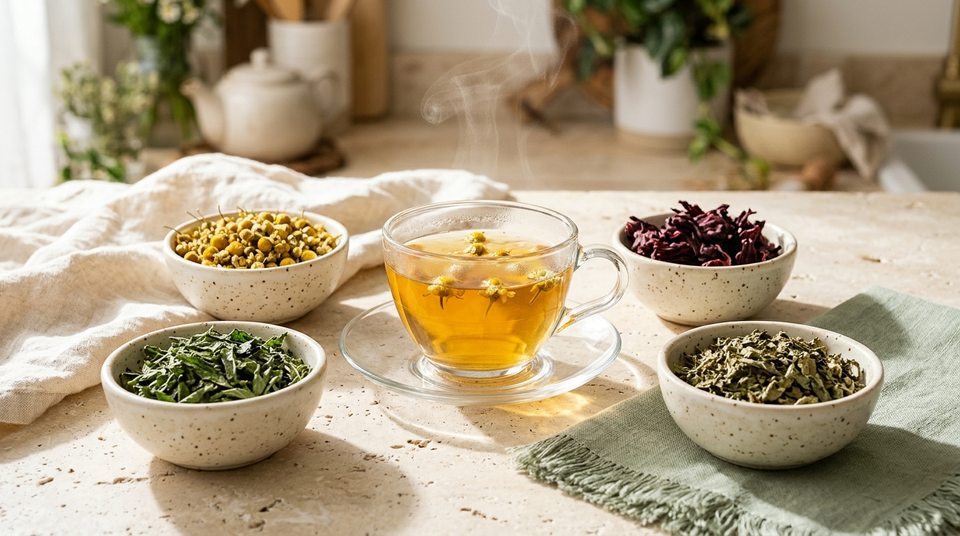
See the herb in context.
Watch our video guide The Most Powerful Herbs in the World, Explained and explore the plants it introduces.
Explore another herb.